
11 Best Ecommerce Email Marketing Software in 2026 (Tested)
 Paul Newham
Do you run a retail website? Are you looking for an email marketing service for your business? You’ve probably noticed something in your search so far. Not all email marketing platforms are created equal for ecommerce. Some do it very well. Some specialize in ecommerce. Others… well, let’s just say they don’t do it as well.
That can make finding the right email marketing software for ecommerce tough. But don’t worry. That’s what Email Vendor Selection is here for. I’ve been around the block more than once, using most email marketing platforms. I know the ecommerce specialists from the regular Johns. I know the retail-friendly from the commerce-challenged.
I’ve picked out the best for promoting your products via email (and more). I’ll tell you what they’re best at, their key features, and who they suit best. What they cost, their pros and cons. Everything you need to pick the right ecommerce email marketing service for you.
11 Best Ecommerce Email Marketing Software Overview
Success in retail email marketing depends on one thing above all else. Integrating your email marketing app with your ecommerce platform.
Ecommerce integrations speed everything up. You sync your store’s data with the email marketing software. This lets you import product listings straight into emails. You can use customer data to segment and send personalized messages. And trigger automated campaigns.
Ecommerce integrations also let you track marketing performance. You can analyze the impact of email marketing campaigns on sales.
All the platforms I’ve picked out do all of these things and more. Here’s a summary of my top 11.
| Best for | Free Plan / Trial | Starting Price (monthly) | Score | |
| Omnisend | Shopify Stores | Yes | $16 |  |
| ActiveCampaign | Marketing Automation | Yes, 14 days | $15 |  |
| Klaviyo | Fast-Growing Stores | Yes | $20 | |
| Maestra | DTC Brands | No | $2,990 | |
| GetResponse | Sales Funnels | Yes | $13.30 |  |
| Brevo | Multichannel Marketing | Yes | $8.08 | |
| MailerLite | Beginner Email Marketers | Yes | $9 |  |
| Moosend | Smaller Stores | Yes, 30 days | $7 | |
| SendX | Yes, 30 days | $7.49 |  | |
| Privy | Yes, 15 days | $30 |  | |
| SmartrMail | Yes | $8.75 | |
What to Look for in the Best Ecommerce Email Marketing Platform
The fundamentals of ecommerce email marketing are no different from any other business. You want to be able to build and send attention-grabbing HTML emails. You want to manage and grow a contact list. You want to be able to target emails so they are relevant to recipients. And you probably want to automate campaigns to save time.
At the same time, ecommerce is unique in many ways. An ecommerce email marketing strategy is sales-focused. The most popular types of email for ecommerce marketing are product-led promotions. Discount-led incentives. And transactional emails. And you want your campaign targeting to be led by customer data from your store.
This all puts specific demands on ecommerce email marketing tools. Here’s what to look for.
- Integrations: Integration between your email marketing platform and your ecommerce platform is a must-have. The first thing to check is that an email marketing service connects to your webstore.
- Customer data syncing: What you can do once you’ve connected your store matters. Some email marketing platforms will sync customer purchase history only. This gives you something to go on for targeting campaigns. But the more customer data you can use, the better your targeting will be. The gold standard is customer behavior tracking. This allows an email marketing service to use data about products a customer has browsed. Frequency of visits to your store and more.
- Product listings: Look at the details about importing product data from your store. The bare minimum should be dropping full product listings straight into emails. The best tools give you options for how you select products for your campaigns: personalized recommendations, product categories, best sellers, and random selections. The very best allow ‘shoppable content’ that adds buy buttons to your emails.
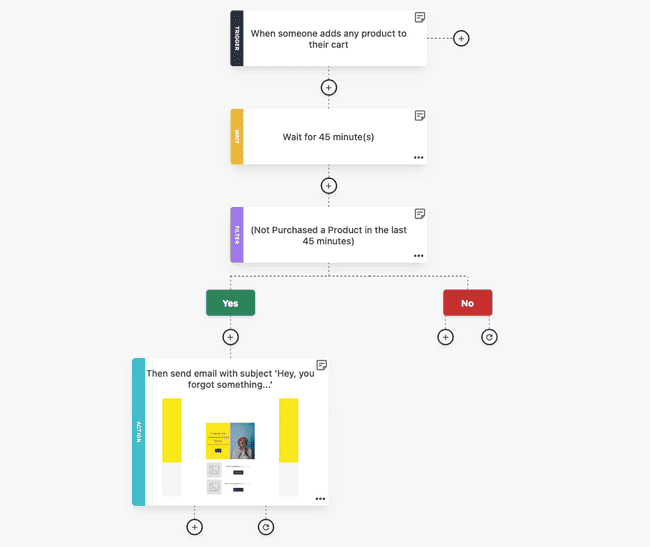
- Automation: Automating when emails get sent and who receives them saves all ecommerce marketers time. Even better is when you have automated workflows ready-made for you. For ecommerce businesses, the most useful workflows include abandoned cart recovery emails. New subscriber onboarding emails that include a special offer. And targeting promotions or cross-sell recommendations based on browsing or purchase data.
- Segmentation: Online retailers want to use customer data to create segments. So again, the details of customer data syncing are important. The best examples update segments automatically based on customer behavior.
- Deliverability: Ecommerce businesses need ESPs with high deliverability, good sender reputation, and anti-spam tools. Like list cleaning, spam checkers, and inbox placement tests.
11 Best Ecommerce Email Marketing Platforms
Omnisend: Best for Shopify Stores
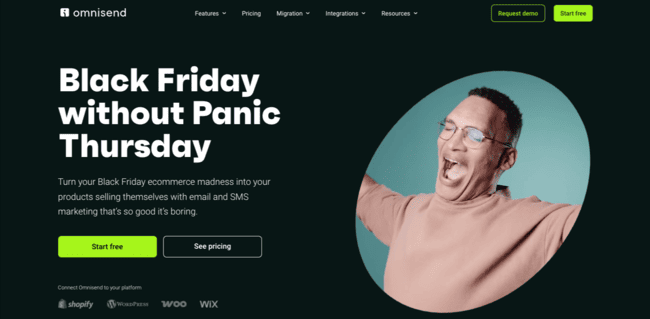
Omnisend is an email marketing software made for online retailers. It’s an ecommerce specialist, and that is what they do. Most of their customers are Shopify users, but it also connects directly with BigCommerce, WooCommerce, and Wix.
It auto-generates discount coupons that work with Shopify checkout. And you can import product listings to sell directly in emails. All of this comes via a very straightforward integration.
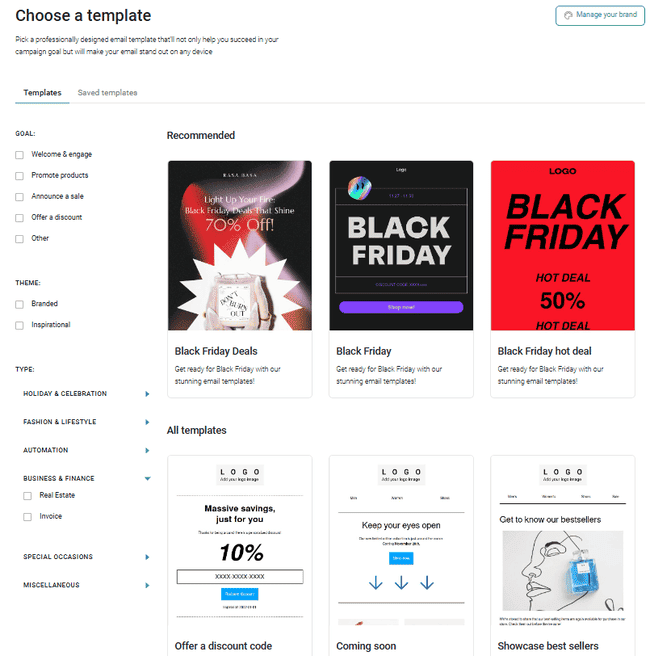
Omnisend nails ecommerce email marketing well. We found it user-friendly. It has a fantastic choice of 350+ email templates. The design quality is good, and you can import branding from your web store. Turning templates into finished emails is easy in Omnisend’s drag-and-drop editor.
Omnisend includes SMS marketing on all paid plans. You can automate flows with email and SMS. Omnisend’s marketing automation tools include 33 workflow templates. And a workflow editor with precise triggers, filters, and A/B testing.
One other standout feature of Omnisend is its Customer Lifecycle Map. This is both a segmentation and an automation tool. It uses webstore data to rank customers on their levels of engagement. Then gives you targeted workflows for each lifecycle stage.
Omnisend Pros
- Built for ecommerce
- Deep native integrations with Shopify, WooCommerce, BigCommerce, and Wix
- 350+ email templates with quality ecommerce designs
- Customer Lifecycle Mapping using customer data from your store
- 24/7 live chat and email support, even for free users
- Attractively priced and offers a free plan
Omnisend Cons
- It only supports English as an interface language.
Omnisend pricing starts at $16 a month with 500 contacts, 6,000 emails, and $1 SMS credit. The free plan gives you 250 contacts and 500 emails.
Sign up here and use our discount code EVS30 to get 30% off for the first 3 months.
Get started with Omnisend for free or read our full review
ActiveCampaign: Best for Ecommerce Marketing Automation
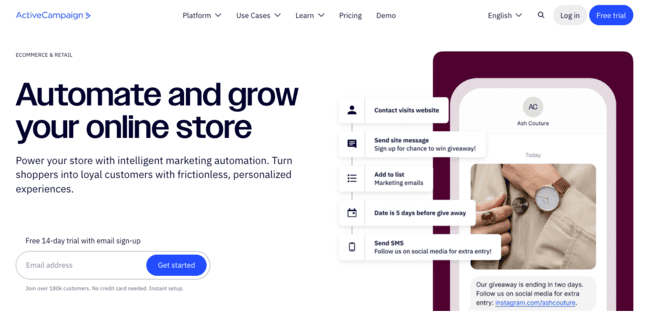
ActiveCampaign is one of the most powerful email marketing platforms around. It’s got something for everyone. But its standout strength are its marketing automation tools. The way it connects marketing and sales CRM. And the fact that it has 1,000 integrations.
These include major ecommerce platforms like Shopify, BigCommerce, Magento, and PrestaShop. Plus, the WP Fusion app for integrating online stores built in WordPress. And major payment platforms like Stripe and Square.
For the choice of ecommerce integrations, ActiveCampaign is hard to beat. But it’s even better at automating your marketing and sales processes through your store.
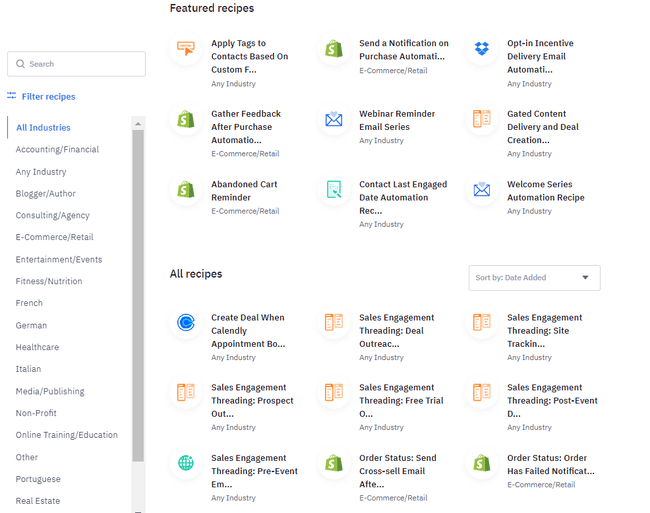
ActiveCampaign has 900+ automated workflow templates to pick from. A lot of them focus on specific goals. You can customize them in ActiveCampaign’s superb user-friendly workflow editor. You can create highly refined automations tailored to your precise business needs. And it’s surprisingly easy to get the hang of.
With a connected store, you can use customer data to trigger and target workflows. For example, automatically launching an email campaign when someone browses a particular product. Or creating segments based on levels of activity. Or purchase history.
ActiveCampaign uses AI to ‘learn’ which activity works best. So you can improve results over time. It also owns transactional email service Postmark. And you can manage ads on Google, Facebook, and LinkedIn.
ActiveCampaign Pros
- 1,000 integrations, including with major ecommerce platforms like Shopify, BigCommerce, and WooCommerce
- Advanced marketing automation tools with 900+ workflow templates
- Transactional emails
- AI analytics suggests how to improve results over time
ActiveCampaign Cons
- The 14-day free trial is great, but a free plan would be even better.
- Transactional emails are a paid add-on.
ActiveCampaign prices start at $15 per user per month with 1,000 contacts and 10,000 emails a month. There are limits on automations, segmentation, and analytics until you get to the Plus plan. That starts at $49 a month.
Try ActiveCampaign for free or read our full review
Klaviyo: Best for Growing Ecommerce Businesses
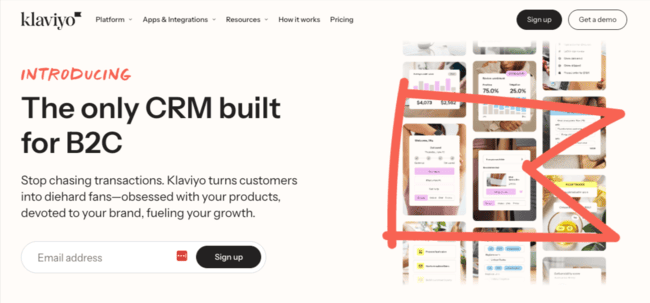
Klaviyo is an ecommerce email marketing specialist. It works best with one of the 15 ecommerce platform integrations. Including Shopify, WooCommerce, BigCommerce, and Magento. And it makes connecting your store super easy. With links and wizards for all tools and widgets you want to set up.
Klaviyo has everything that an ambitious, growing online retailer needs. It’s packed full of features. But also great for usability. Including excellent onboarding tools and wizards for all its main features.
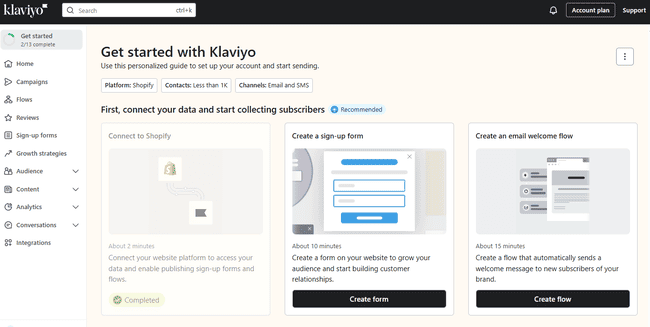
Through your store integration, all activity is geared towards driving sales. That includes being able to sell products directly from emails and SMS messages. Using customer data from your store for targeting and segmentation. Reporting and analytics that focus on sales conversions. And special features like customer review management. This automates review requests every time a customer completes a purchase. And manages how reviews are published in your ecommerce store. This makes Klaviyo one of the best Yotpo alternatives.
One of Klaviyo’s biggest strengths is the number of templates it has. It has 350+ email templates. 100+ form templates. And 80+ automation workflow templates. The email and form templates are consistently eye-catching and professional-looking. The templates are geared towards promotions, new product lines, and time-sensitive deals. And lots of ‘lead magnet’ templates for forms. So things like incentivized sign-ups, spin-to-win games, and exit-intent pop-ups. Email and form templates are fully customizable using drag-and-drop editors.
Automation templates are specific to the ecommerce platform you use. They are organised by ecommerce goal. You can search for goals like attracting and onboarding new email or SMS subscribers. Or building loyalty or winning back lapsed customers. Klaviyo’s workflow editor also has a user-friendly drag-and-drop interface.
Klaviyo Pros
- 15 ecommerce platform integrations and 350+ integrations overall
- Simple store setup and great support for advanced tools
- Huge choice of email, automation, and form templates
- Sell directly from Email & SMS
- Tools to request and manage customer reviews
Klaviyo Cons
- Klaviyo costs more than most similar platforms
- We’d love to see landing pages in Klaviyo
Klaviyo pricing starts at $20. This includes 500 contacts and 5,000 emails. Email + SMS starts at $35 with 1,250 SMS credits as well. Pricing rises noticeably as you increase contact, email, and SMS limits. And the review management tool is a paid-for extra. Klaviyo’s free plan has 250 contacts and 500 monthly emails.
Get started with Klaviyo for free or read our full review
Maestra: Best for Mid-size & Large DTC Brands
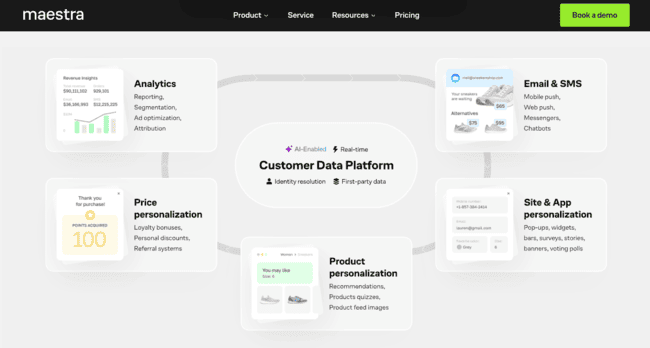
Maestra is an all-in-one email marketing, automation, and personalization platform made for DTC online retailers. It’s for mid-market to enterprise ecommerce businesses, and that focus shows in its features. Maestra connects with Shopify, BigCommerce, WooCommerce, and Magento, syncing your store’s data into its CDP.
Maestra focuses on ecommerce marketing features, especially for personalization and customer retention. You can launch a loyalty program to reward customers with points and tiered VIP perks. It also has strong on-site personalization tools. You can grow your list with targeted pop-ups, inline forms, and dynamic banners. Or increase your bottom line with product recommendation widgets.
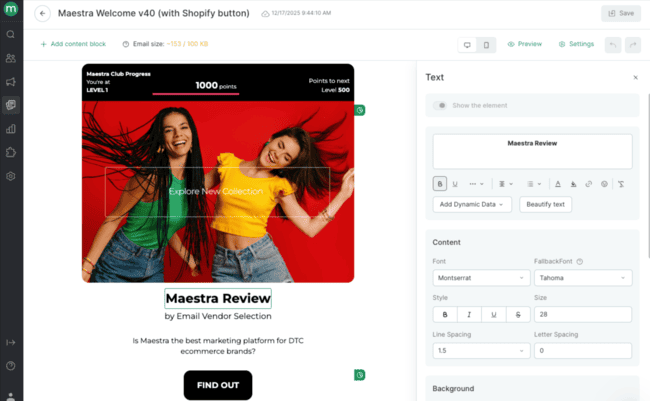
Maestra’s interface is user-friendly. The drag-and-drop email builder makes designing campaigns easy. Creating multi-channel automations with email and SMS is intuitive. And you can A/B test flows or tweak conditions with precision.
One standout feature is Maestra’s Customer Data Platform. Maestra tracks every customer interaction, from emails and pop-ups to product views, clicks, and purchases. All this data gives you fine control over your segments. You can filter customers by campaign engagement, full order history, loyalty activity, promo code usage, and custom data fields. You can also use computed fields, like most viewed products or average order value. Maestra’s RFM segmentation makes it easy to group and prioritise customers based on how recently and frequently they buy, and how much they spend.
We also appreciated the level of support provided. Maestra includes a CSM for every client, who will actively assist with strategy and even help build your templates or automations.
Maestra Pros
- All-in-one ecommerce marketing platform, including a CDP
- Shopify, WooCommerce, BigCommerce, Magento integrations
- On-site personalization (pop-ups, product recommendations, banners)
- Advanced, multi-channel ecommerce automation
- Every client gets a CSM for migration, strategy, and ongoing support
Maestra Cons
- Expensive for small stores, prices start at $2,990/mo
- Only 13 pre-built email templates, but your CRM will build templates for you for free
Maestra pricing starts at $2,990/month for 150,000 contacts and all features. There is no free plan or trial, book a demo to get started.
Get a Maestra demo or read our full review
GetResponse: Best for Sales & Marketing Funnels
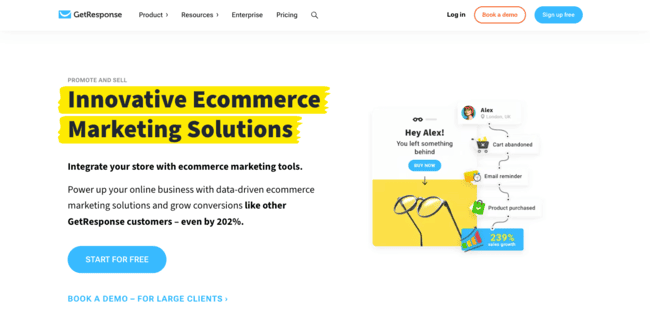
GetResponse is a marketing platform with three faces. Or should I say three distinct plans. Not just in terms of price and features. But who they’re aimed at.
On its cheapest tier, GetResponse is a basic and user-friendly email marketing service. Think newsletters, simple autoresponders, landing pages and forms. At its highest tier, GetResponse is a platform for content creators. It offers tools to build and sell courses, webinars and subscription newsletters.
But for this article, it’s mainly the middle tier we’re interested in. This plan is called ‘Marketer’. But its best features are very sales-focused.
This includes integrations with six leading ecommerce platforms. Shopify, Magento, BigCommerce, WooCommerce, PrestaShop and Shoper. It has easy ways to integrate all.
Once connected, you can make use of GetResponse’s excellent sales funnel tools. These give you templated sequences of ads, landing pages, forms and emails. You can use them to attract leads and direct them straight to your store. Or target specific promotions at existing customers to drive sales. You can use GetResponse’s workflow builder to automate the whole sequence.
Another strength of GetResponse is its multichannel features. The Marketer plan includes unlimited web push notifications. And you can buy SMS as an add-on. You can run Google and Facebook ads. And if you upgrade to the Creator plan, add webinars to your channel mix.
There’s a tool for creating discount coupons for use in your store. And the Marketer plan comes with a revenue tracker.
GetResponse Pros
- Easy and quick ecommerce integrations
- Excellent sales-focused funnels and automations
- Multichannel campaigns with email, web push and optional SMS
- Expand your business model with webinars and courses
- 24/7 chat support on all plans
GetResponse Cons
- Accessing the tools you need for ecommerce is pricey.
GetResponse pricing starts at $13.30. To use GetResponse with a store, you need the Marketer plan. That starts at $48.38 per month. This comes with 1,000 contacts and unlimited emails. There is a free plan with 500 contacts, 2,500 emails, and 1 landing page.
Get started with GetResponse for free or read our full review
Brevo: Best for Multichannel Ecommerce Marketing
Many services on this list offer both email and SMS marketing tools. SMS is attractive to online retailers. It taps into the growing number of people who make purchases on their phones. But most platforms offer it as a paid add-on. Or an extra on higher tiers.
Brevo has email and SMS on all its plans. Including its free tier. Brevo is well known as one of the best free email marketing services around. Well, that extends to multichannel marketing, too.
Brevo is an excellent all-round multichannel marketing service. Especially if you are looking for something affordable and user-friendly. You can throw in WhatsApp as an add-on and run Google and Facebook ads in the free plan. Same with transactional emails. On higher-priced tiers, you can include web push and mobile notifications, too. And you’ll have a free sales CRM to go with your marketing tools.
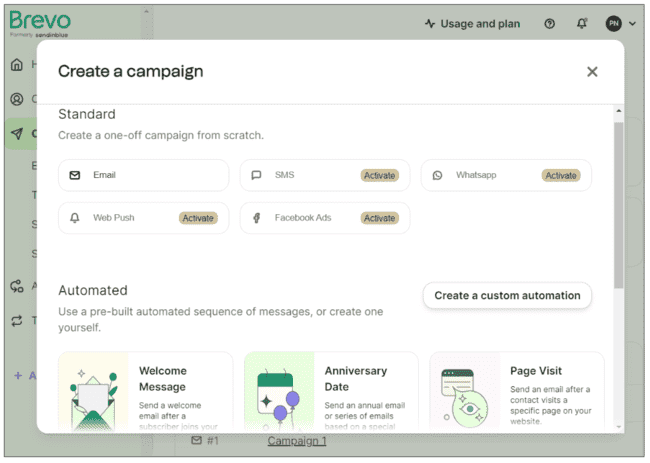
All plans let you connect to 150+ third-party platforms. Including Shopify, WooCommerce, BigCommerce, Magento and WordPress.
Once connected to a store, you can import product listings into Brevo campaigns. Use purchase and other customer data to segment contacts. And to trigger automations. You can also run all your receipts and order confirmations through Brevo. But you can’t sell directly from emails or SMS. And there are no coupons or other discounts.
Brevo Pros
- Email, SMS, WhatsApp, ads, and notifications for multichannel campaigns
- Excellent free plan and great value all round
- Free sales CRM
- Transactional emails
- Unlimited contacts on all plans
Brevo Cons
- You have to get the Business plan to unlock A/B testing and landing pages.
Brevo prices start at $8.08 per user per month. That includes 5,000 emails and 500 contacts. Email marketing automation tools come with the Business plan, starting at $16.17 per user per month. The free plan lets you send 300 emails a day. It comes with 100K contacts. All email building and sending tools. SMS & WhatsApp. Integrations. And transactional emails. You can also build one sales pipeline and have 50 deals for free.
Get started with Brevo here and get 60% off your first 3 months with the coupon code: Insider60.
Sign up to Brevo for free or read our full review
MailerLite: Best for Ecommerce Marketing Beginners
I rate MailerLite as probably the easiest email marketing platform I’ve used. It’s purposefully stripped down and simple. But it does all the basics well. That makes it great for beginners. And that applies if you’re new to ecommerce email marketing, too. The fact that you can start for free helps as well, of course.
I haven’t picked out the best free ecommerce email marketing platform for this list. The choice is too tight between Brevo and MailerLite. Both have superbly generous free plans. You can spend a lot of time marketing your store for free on both.
MailerLite has native integrations for Wix, Squarespace, WooCommerce, BigCommerce and Shopify. As with everything in MailerLite, connecting a store couldn’t be easier. It takes care of everything in just a few clicks.
What you can do with your synced store leans to the basic side. You can import product listings into emails. MailerLite is good for sales tracking, too. So you can see how your campaigns affect orders.
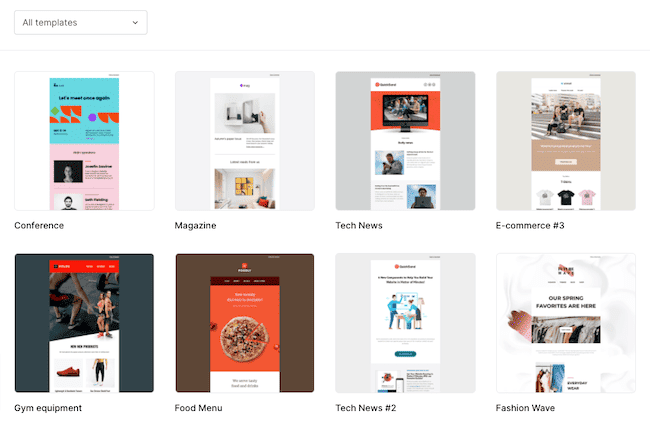
Building, targeting and automating email campaigns are all very straightforward. It’s got a great user-friendly drag-and-drop email editor to create custom templates. There’s a wide choice of content blocks for emails. And along with templates, pre-formatted content blocks speed up design. There are AI tools to help write and build. And you can personalize everything using dynamic content. This includes using customer data from your store to change what people see in emails. Such as different product recommendations.
Another strength of MailerLite is its sister service: MailerSend. MailerSend is an email API and sending service. It manages its own purpose-built sending infrastructure for transactional emails. And that means it takes deliverability very seriously. MailerLite is excellent at keeping your emails out of spam and in people’s inboxes. It monitors your sender reputation continually. And has an email verification tool to keep your lists clean of bad emails. You can use MailerSend as an add-on to run transactional emails.
MailerLite Pros
- Beginner-friendly tools that focus on simplicity and usability
- Excellent value and a fantastic free plan
- Easy connection to most major ecommerce platforms
- Excellent deliverability rates
- Transactional emails
MailerLite Cons
- While basic is what MailerLite goes for, its automation options are a little too basic.
MailerLite pricing starts at $9 a month for 3 users. This includes 500 contacts. You can send unlimited emails on all plans. The platform’s free plan has 1,000 contacts and 12,000 emails a month.
Get started with MailerLite for free or read our full review
Moosend – Best for Ecommerce Microbusinesses
Moosend isn’t a specialist ecommerce-only email marketing service like Omnisend or Klaviyo. The big difference is that Moosend lets you do ecommerce marketing on a budget. It’s one of the cheapest email marketing platforms going. That, and what you get for your money, make it ideal for smaller stores.
Moosend has 42 native third-party integrations. WooCommerce and Magento are on the list. As are smaller ecommerce platforms like Opencart and CS-Cart.
Two things make Moosend stand out as an ecommerce marketing service. One is how it uses customer data from your connected store. Moosend tracks customer behavior in your store. So not just purchases. But pages visited. Products browsed.
It uses behavioral data to manage email personalization, segmentation, and automations. The level of sophistication for all three is impressive for the price of the platform. For example, there’s an AI tool that changes email content based on customer history. This is really powerful for making product recommendations. You can tailor the products contacts see based on browsing and purchase history.
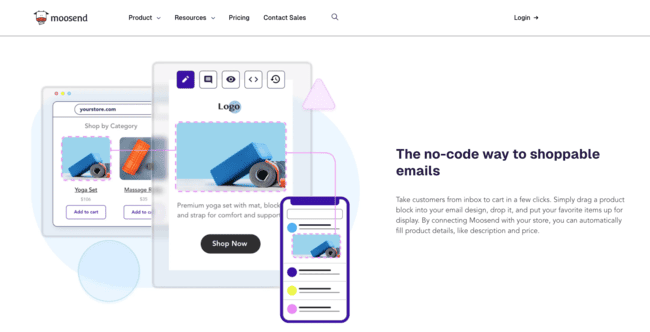
The other great ecommerce feature is that you can build ‘shoppable emails’. This means you’re not just dropping product listings or recommendations with links to your store. You can add ‘buy now’ buttons that add items directly to the cart.
You can run transactional emails as a paid add-on. Another optional extra is Moosend’s Audience Discovery product. This is an AI tool that analyzes customer behavior. It uses tracking data to score engagement. Then it sets funnel stages and tags for segments. And suggests appropriate activity for connecting with each group. But it also learns the patterns of behavior of these groups. And suggests how to reach similar cohorts. This way, it serves as a lead generation and audience growth tool.
Moosend Pros
- Great value for money
- Uses customer data tracking from your store to drive segmentation and automation
- AI-powered content personalization and product recommendations
- ‘Shoppable’ emails to add products directly to the cart
- Has an add-on for transactional emails
Moosend Cons
- Moosend is one of the few SME-focused email marketing platforms that doesn’t have a free plan.
Moosend pricing starts at $7 per user per month. That includes 500 contacts and unlimited emails. You also get full access to all tools. There isn’t a free plan, but you can test it with a 30-day free trial.
Moosend has generously offered an extra 10% off for EVS readers. Sign up here to get the discount.
Try Moosend for free or read our full review
SendX
Several services on this list have very low starting prices. But to judge which email marketing service is the cheapest, you have to look beyond those. You have to look at what happens when you up your number of contacts. And what features you get for your money.
On that basis, the best budget platform for ecommerce email marketing is clear. If you want the cheapest prices, SendX wins hands down.
SendX follows the usual budget email marketing platform model. It focuses on simplicity and ease of use. It gives you all the core features. Drag-and-drop HTML email building. Forms and landing pages for list building. Basic segmentation and automation. And it does those to a good enough standard at a very attractive price.
For ecommerce, SendX integrates with Shopify and WooCommerce only. What you get from these integrations is basic. They sync customer data with your SendX contact list. You can use this to segment contacts based on purchase history. And use certain data to trigger automations. But this is limited to purchases and abandoned carts. The automation builder is limited to simple sequences. With WooCommerce, you can’t import product listings into emails.
SendX recently added deliverability tools. This covers IP and domain reputation tracking. And inbox placement testing for all emails you create. You can extend this with add-ons that include an AI click and open tracker. Read, skimmed, and glanced analysis to evaluate engagement. And a dynamic sending tool that sends emails when your contacts are most likely to read them.
SendX Pros
- Lowest prices on the market, especially for larger lists
- Shopify and WooCommerce integrations
- Audience segmentation based on purchase behavior
- Optional send time optimization and engagement analysis
SendX Cons
- I’d like to see more email templates
SendX pricing starts at $7.49 per user per month. This gives you 1,000 contacts and unlimited emails. SendX gets better in value the more contacts you have. By 15,000 contacts, it’s less than half the price of MailerLite. The one pricing tier gives you access to all core features. There’s no free plan, but there is a 30-day free trial.
Privy
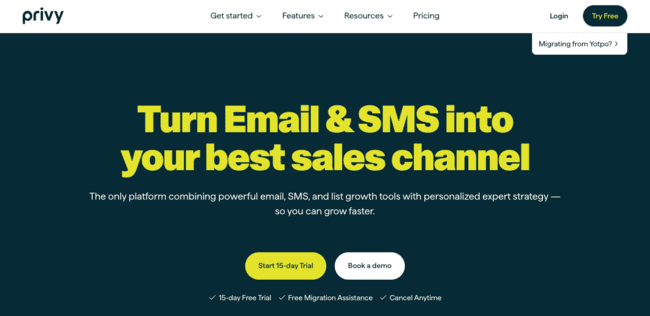
Privy is another specialist ecommerce service. You need a store to connect it to. That puts it in the same niche as Omnisend and Klaviyo. Like both of those, Privy lets you run email and SMS campaigns to promote your store. Privy stands out for how it links marketing to sales conversion. It describes itself as specializing in ‘list growth and conversion’.
You attract new leads with eye-catching landing pages and offers. You get them to sign up for those offers, capturing them as a new contact. And then you use your campaigns to nurture them into returning customers.
Privy’s standout strength is its lead capture tools. It’s got a great choice of forms. And that doesn’t just mean different designs for form templates. It means the creative ways Privy helps you encourage customers to sign up. And share information with you. It ‘gamifies’ forms with spin-to-win wheels and other incentives. You can turn forms into quizzes, polls, and surveys. All are easy to add to your existing store. And you get great control over the triggers for how and where forms appear.
The interactive elements help you capture more data about your contacts beyond names and email addresses.
Behavior tracking and other customer data drive campaign personalization and targeting. So based on poll or survey results, you can send different promotions. Privy lets you automate how all of this happens with a user-friendly workflow builder. The final ingredient is building time-limited promotions to encourage conversion.
Privy offers simple integrations with Shopify, Wix, BigCommerce, Squarespace and WordPress. Apart from that, its choice of other integrations is very small. It only has 7 non-ecommerce integrations.
Privy Pros
- Specializes in lead capture and nurturing for ecommerce
- Great choice of interactive forms, quizzes, polls, and surveys
- Gamified lead capture and conversion prompts
- Email and SMS campaigns
Privy Cons
- Privy has a higher starting price than most services in this category
Privy pricing starts at $30 a month. That gives you 1,500 contacts, unlimited emails, and 250 SMS credits. You can use just the lead capture tools for $24 a month. There is no free plan, just a 15-day free trial.
SmartrMail
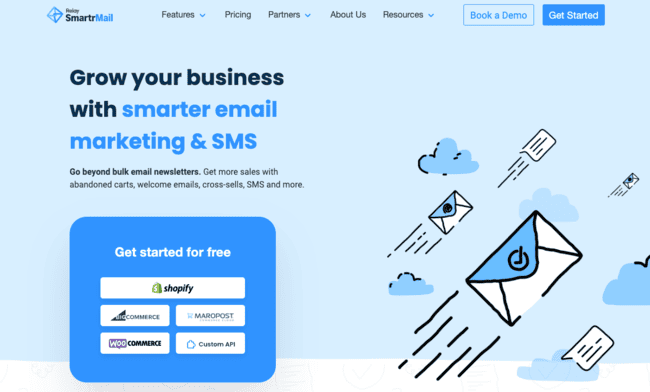
SmartrMail is the most stripped-back ‘ecommerce-only’ platform on this list. Like Klaviyo, Omnisend, and Privy, it only works with an online store integration. But compared to those three, it’s noticeably cheaper. And in some respects, it’s also easier to use. A standout example is how easy it makes email building.
SmartrMail connects to Shopify, BigCommerce, WooCommerce, and Maropost stores. The plug-in process is very simple and syncs all your store contact data. You can use purchase history and behavior data to segment your audience. Segments update automatically as customers browse and buy.
Customer data is also used to trigger automations. SmartrMail doesn’t have the biggest choice of automation templates I’ve seen. I counted 17. But they cover most of the essentials you’d want as an online retailers. That includes abandoned carts and browse abandonments. You can set upsell, cross-sell, and reorder automations depending on what customers buy. And you can request a review automatically when a purchase is made.
SmartrMail’s best feature is its AI-powered product recommendations. This uses data captured in your store and makes creating ecommerce emails very easy. The recommendations tool is a content block in the email builder. You drop this into an email. And it automatically imports full listings for personally curated products from your store.
Content blocks are the secret weapon that drives email building in SmartrMail. As well as personalized recommendations, you can drop in details of the last product a contact bought. And you can add product listings simply by typing the SKU into an email. Shopify users can also generate unique coupon codes for every email sent.
SmartrMail Pros
- Cheap ecommerce-only specialist
- Super easy email building
- AI-powered product recommendations
- Auto-updated segments using your customer data
- Coupon codes for Shopify stores
SmartrMail Cons
- There is limited flexibility and control with features like segmentation and automation. All but very small retailers may find it a little basic for their needs.
SmartrMail pricing starts at $8.75 a month. Though you only get 200 contacts and 2,400 emails for that. SMS credits are charged extra on the Essential plan. You can use Smartr for free if you have fewer than 200 subscribers.
What is the Best Email Marketing Platform for Ecommerce?
So this is the part where I tell you what I think the best email marketing tool is overall, right? Well, sorry to disappoint you. But I can’t do that. The best email marketing software depends on the type of store you run. And what you want to get most out of email marketing.
But here’s what I do recommend. If you run a Shopify store, I’d pick Omnisend as your first choice. It’s a strong all-round performer in all the areas that matter for ecommerce businesses. It matches advanced features with a user-friendly design. And it’s good value, too.
If you’re looking for advanced sales and marketing automation, there’s only one winner: ActiveCampaign. Its choice of automation workflows is unrivalled. If you’re a DTC brand looking for automation, CDP, loyalty, and on-site personalization, give Maestra a try.
If you’re an ecommerce start-up or a very small store, value and simplicity matter. There are several simple, beginner-friendly, and cheap email marketing tools on my list. The best are MailerLite, Brevo, and Moosend. MailerLite is the most user-friendly overall. Brevo is great if you want cheap multichannel options. You can send SMS and WhatsApp messages on all plans. And use it for transactional emails. MailerLite and Brevo are the best free email marketing services for ecommerce, too.
Moosend has the best overall cost-to-features package for small businesses. Its biggest strengths are the quality of its automation and segmentation tools. And the fact that you can build shoppable emails for such a low price. But it doesn’t have a Shopify integration, so keep that in mind.